Animal Movement Verbs in English for Kids
Animal movement verbs show how creatures travel: crawl, hop, fly, or swim. Animal Movement Verbs in English for Kids: Words and Activities links each verb to an animal, action, and sentence. Acting out words before explaining them supports beginners and multilingual learners. Start with familiar animals and contrasting movements; revisit verbs through games and stories.
Core Words and Their Meanings
Start with movements children can copy: walk, run, crawl, hop, climb, fly, and swim. Add precise verbs: slither, glide, waddle, gallop, stalk, and pounce. The table separates movements children may confuse.
Teach Animal Movement Verbs in English for Kids: Words and Activities from broad actions to precise distinctions. After learning run, a child can compare gallop, scurry, and sprint. Link each verb to an image or movement, not a long definition.
Using the Verbs in Context
Short, complete sentences turn recognition into speech. Begin with the animal as subject: “The frog hops.” Once learned, add place or direction: “The frog hops across the path.”
- The turtle crawls over the sand.
- The squirrel climbs up the tree.
- The swan glides across the water.
- The kitten pounces on a toy.
- The ducks waddle towards the pond.
Animal Movement Verbs in English for Kids: Words and Activities practice can build questions: “Which animal slithers?” “Can an elephant climb?” and “How does a penguin move?” Accept one-word answers before full sentences.
Use the base form after can: “A bird can fly,” not “A bird can flies.” For current action, use the -ing form: “The bird is flying.” Teach both patterns through examples, without a grammar lecture.
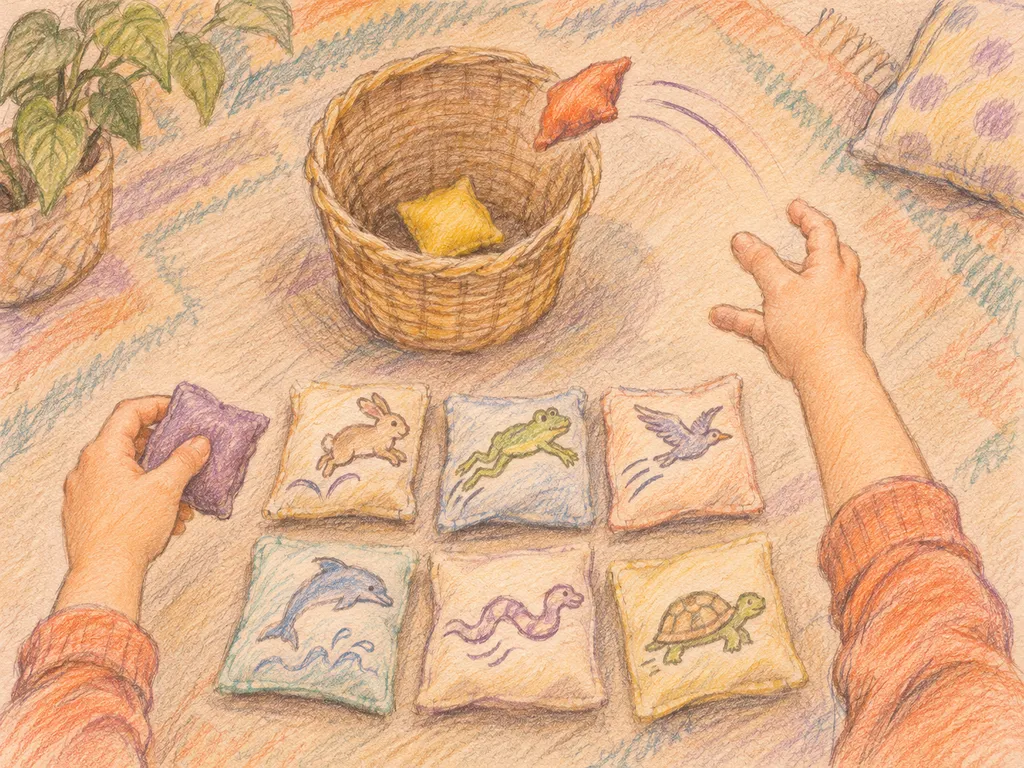
For children, use a substitution drill with six picture cards. Model “The rabbit hops across the grass,” then keep the verb and change the animal: “The kangaroo hops across the grass.” Next, keep the animal and change the place: “The kangaroo hops across the playground.” After two guided rounds, ask each child to choose an animal, a movement verb, and a location card to make a sentence. If the combination is silly, invite the group to correct it.
Listen for a common third-person mistake: “The snake slither.” Rather than interrupting immediately, repeat the sentence as a choice: “The snake slither, or the snake slithers?” Then have the child say the corrected version. With ages 4–5, limit each turn to one subject and one verb; add place phrases only when the basic pattern is secure.
How to Introduce New Movement Words
Follow a say-show-do routine. Say the animal and verb, show a picture or toy, then act. Your child copies and repeats: “A snake slithers.” Gesture supplies meaning without translation.
Teach contrasting pairs when children can see the difference. Show walk and run at two speeds; show hop and leap with short and long movements. Ask your child to point, choose, or act before speaking independently.
In multilingual families, the home language can support understanding. Your child may name the animal in another language, then practise its English movement verb. Keep the action as the shared anchor; avoid correcting every word and accent together.
For children, introduce three verbs in one session and revisit them for five minutes over several days. Place three animal cards on the floor. Say “The frog hops,” model the action twice, then give one-step prompts: “Show me hop” or “Which animal slithers?” When those responses are quick, remove the model and ask, “What does the frog do?” This sequence moves from recognition to recall without demanding a full sentence too early.
A common mistake is teaching near-synonyms together before the child controls either word. Introduce jump first; add leap in a later lesson, using distance markers to make the contrast visible. If a child says “The bird fly,” repeat “Yes, the bird flies” naturally, then continue the game instead of stopping for grammar correction.
Activities for Different Ages
For school-age kids, create an animal trail. Call “waddle like a duck” or “crawl like a spider,” with room for safe movement. Use four or five verbs, repeating them in a new order.
For school-age kids, play animal charades. One person silently chooses an animal and movement; others guess with a sentence. Animal Movement Verbs in English for Kids: Words and Activities sticks when children distinguish a hop, leap, crawl, or slither.
For school-age kids, request precise narration. Mute a short nature clip or describe an imagined scene. The learner can compare verbs, add adverbs, and justify a choice: “The eagle is gliding slowly, not flying with quick wing beats.”
Animal Action Detective
Give three clues: “It has no legs. It moves along the ground. It starts with sl-.” Your child answers, “A snake slithers.” Change one clue, then let your child create a puzzle.
Practice Routines and Common Mistakes
Keep practice brief and varied. Sort animals into land, air, and water movements; another day, match pictures to verbs. Later, hide the words and prompt recall from an action or clue. Recall demands more than repetition.
Hop, jump, and leap are not perfect synonyms. Their movements and contexts differ. Show the contrast, accept a sensible answer, then model the precise verb: “Yes, the deer jumps. We can say it leaps.”
Learners may add -s after can or omit it in present-tense sentences. Compare “The horse gallops” with “The horse can gallop.” If your child understands the movement but misses the ending, acknowledge the meaning, then model the correct sentence.
- Choose five animal movement verbs and demonstrate each with a clear gesture.
- Read one animal picture book and pause to name each movement.
- Ask your child to match four animal cards with written verbs.
- Practice one verb per turn using mime, guessing, and complete English sentences.
- Correct confused verbs by contrasting two movements with simple examples.
For the rule wording, British Council LearnEnglish Kids is a useful reference while the practice examples here stay adapted for children.
Frequently Asked Questions
How Many Animal Movement Verbs Should My Child Learn at Once?
For school-age children, begin with four to six verbs they can act out. Add words after your child recognises the first set in pictures, actions, or questions. Older learners may handle more, but distinct contrasts matter more than speed. Revisit earlier verbs before precise alternatives.
Does My Child Need to Know All the Animal Names First?
No. Pair familiar animals with new movement verbs, then teach less familiar animals through pictures and short descriptions. For a new animal name, pair one noun with one verb. Avoid combining several unfamiliar animals and movements in one round.
Are Hop, Jump, and Leap the Same?
They all involve leaving the ground but are not always interchangeable. Hop often means a short, light movement; leap suggests greater distance or height; jump is broadest. Actions, pictures, and paired sentences show the distinctions better than definitions.
How Often Should We Practise These Verbs?
Animal Movement Verbs in English for Kids: Words and Activities suits brief, repeated practice across the week. Try charades, picture sorting, or sentence questions, then revisit the words another day. Stop before fatigue and switch tasks while retaining familiar verbs.
Want to see how these ideas work in a real lesson — try a LearnLink trial lesson.
Stay updated on our latest tips and resources by following us on Instagram LearnLink.